

Why Do Translation Earbuds Struggle With Noise, Accents and Fast Speech?
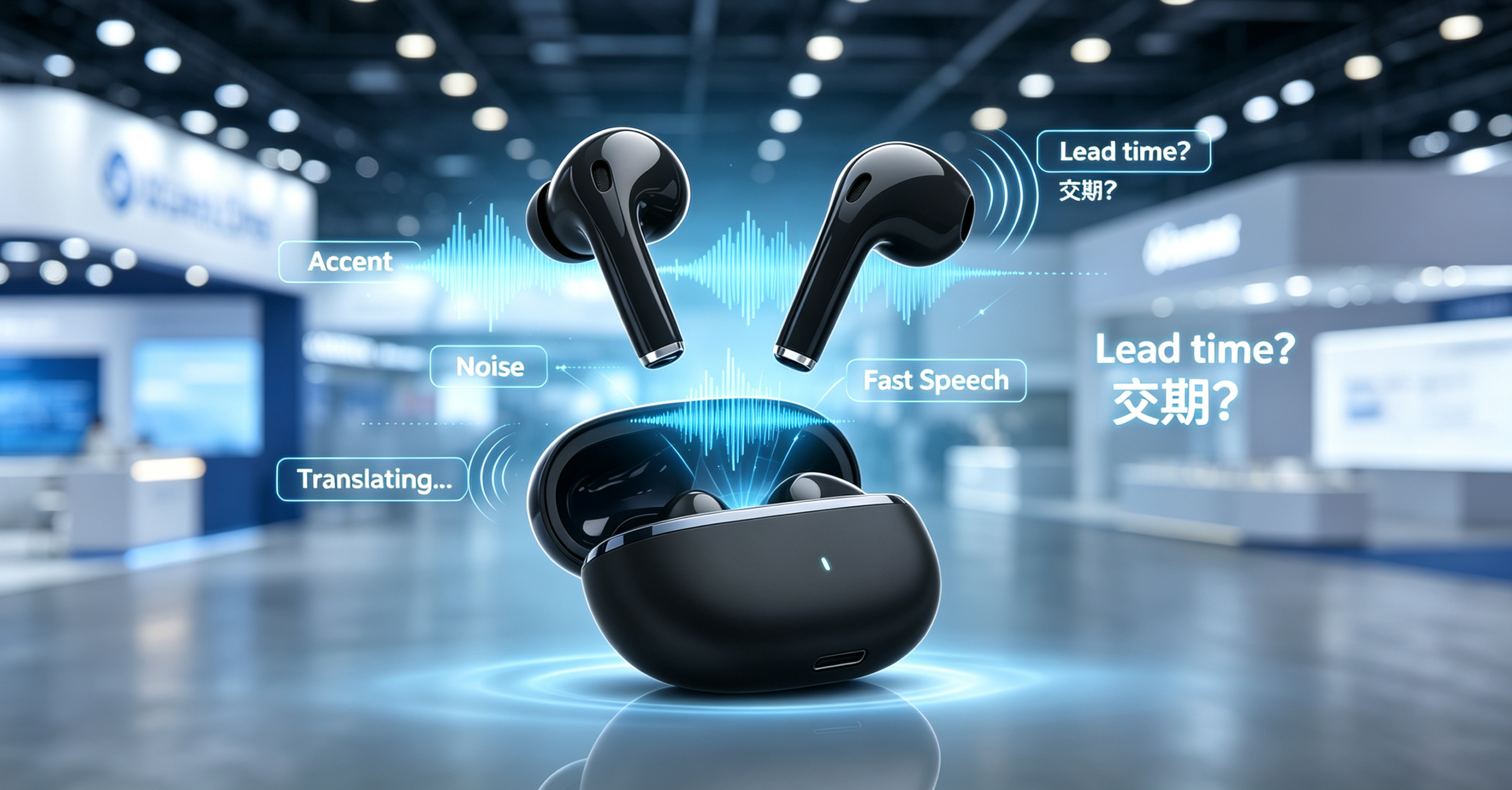
Translation earbuds streamline cross-language conversations, yet their real-world performance is far from perfect. Most translation errors do not stem from poor translation algorithms — they start with flawed speech recognition. Before any translation happens, the device must accurately capture and interpret human speech, which is easily disrupted by accents, background noise, and natural fast speech.
Accents: Familiarity Beats Language Support
Every speaker has an accent. Pronunciation, rhythm, and intonation vary wildly across regions, even for the same language. While modern earbuds handle common accents well, performance drops sharply when thick accents, fast speech, and industry jargon overlap.
Brands’ “100+ languages” marketing is misleading. Listing a language in settings is simple; understanding accented, spontaneous real-life speech is the true challenge, especially in business talks mixed with niche terms, abbreviations, and local expressions.
Background Noise: Competing Human Voices Are the Biggest Hurdle
Steady ambient noise like air conditioner hum is easy for AI to filter out. The real issue is overlapping human voices — common in trade shows, offices, and crowded public spaces.
Earbud microphones and noise reduction software can suppress minor interference, but they cannot perfectly isolate a target voice from surrounding conversations. The most effective fix is simple: move closer to the speaker to prioritize clear, direct audio input.
Fast, Natural Speech Creates Timing Dilemmas
Human speech is informal and inconsistent: words blend, sounds drop out, and speakers often pause, correct themselves, or restart sentences. Unlike textbook text, real dialogue relies heavily on context.
Real-time translation faces a critical tradeoff: translating too early distorts meaning from incomplete sentences, while waiting too long makes conversations lag. This constant judgment call makes live speech translation far harder than static text translation.
Perfect Recognition Does Not Equal Correct Meaning
Even with 100% accurate transcription, contextual misunderstandings still occur. Idioms, casual phrases, and industry-specific terminology change meaning based on scenarios. General AI often misses niche business usage of terms like MOQ, firmware, or lead time.
For this reason, translation earbuds excel at keeping conversations smooth, but never trust live voice translation for critical details including numbers, prices, specs, delivery dates, and contract terms. Written confirmation is always essential for business accuracy.
Quick Tips for Better Translation Accuracy
No need for slow, unnatural speech — normal talking works best. Follow these simple rules for reliable results:
*Stay close to the speaker and earbud microphones
*Avoid noisy areas or loud speaker sources
*Repeat key numbers, codes, and technical terms
*Use earbuds for fluent communication, then confirm key details in writing
Final Thoughts
Translation earbuds are practical daily tools, but their performance depends on audio hardware, AI recognition, and environment. Awkward or wrong translations rarely mean bad translation logic — more often, the device simply failed to hear or understand the original speech correctly.